
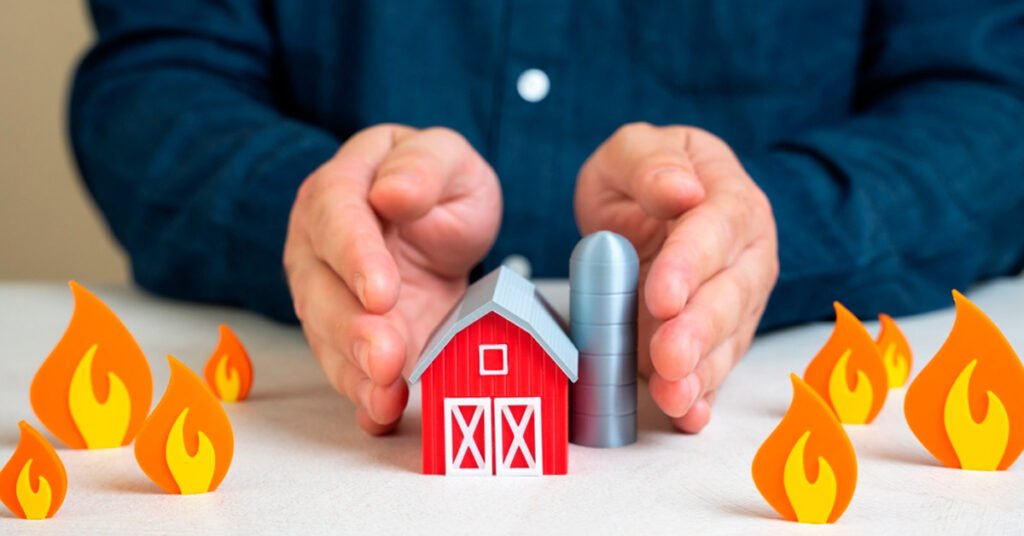
A fire broke out at a textile warehouse in Bhiwandi on a Tuesday afternoon. By Wednesday morning, the owner had lost stock worth Rs. 40 lakhs, a significant portion of the building structure, and months of production capacity. The fire insurance policy? It was renewed the previous year without anyone reviewing whether the sum insured still matched the actual asset value. The gap in coverage was painful.
That’s the quiet risk sitting inside most business fire insurance policies — not the absence of cover, but the mismatch between what’s insured and what’s actually at stake.
What fire insurance actually covers
A standard fire insurance policy covers physical loss or damage to your property and assets caused by fire, lightning, explosion and implosion, aircraft impact, riot and strike damage, impact from vehicles, storm and cyclone, flood and inundation, and sprinkler leakage. These are called Standard Fire and Special Perils — and they form the base of most commercial fire policies in India.
The assets covered can include your building structure, plant and machinery, stock in trade, furniture and fixtures, and electronic equipment. Which assets you include — and at what value — determines how useful the policy actually is when you need to make a fire insurance claim.
Most businesses either under-insure assets to reduce premium or forget to update values as the business grows. Both are costly mistakes.
What the policy won’t cover — and where gaps tend to appear
Fire insurance has clear exclusions. Damage caused by electrical short circuit in the insured item itself is excluded under standard policies. Spontaneous fermentation or heating, war and nuclear perils, and intentional acts are also outside the scope of cover.
The more common problem, though, isn’t the exclusions — it’s the gaps that come from inadequate structuring. A factory owner who insures the building but not the machinery. A trader who insures stock at cost price but doesn’t account for seasonal inventory spikes. A business that hasn’t updated the sum insured in four years despite doubling its asset base.
These aren’t edge cases. They come up in fire insurance claims far more often than most people expect.
Add-on covers worth knowing about
A base fire policy can be extended to cover additional risks that are genuinely relevant to many businesses. Earthquake cover is one of the most underutilised add-ons — particularly relevant in seismically active zones. Loss of profit or business interruption cover is another. It compensates for the revenue your business loses while operations are suspended after a fire, not just the physical damage itself.
Terrorism cover, debris removal, and architect and surveyor fees can also be added. Whether these are worth the additional premium depends on your specific business, location, and how long you could sustain operations after a major loss.
That’s not a question most business owners think through until it’s too late.
How to make sure your fire insurance actually works
The starting point is an honest reinstatement value assessment — what would it actually cost to rebuild or replace your assets today, not what you paid for them years ago. Insuring at market value rather than reinstatement value is a common structural error that leads to partial claim settlements.
Beyond valuation, review your policy every year. Not just for renewal — for relevance. Has your stock profile changed? Have you added machinery? Has the building been extended? A fire insurance policy that isn’t updated to reflect your current situation isn’t really protecting your current business.
Working with an independent consultant rather than going directly to an insurer also makes a meaningful difference. An independent advisor can benchmark your coverage terms, identify gaps, and recommend the right insurer for your risk profile — not just the one offering the lowest headline premium.
If you’d like a review of your current fire insurance programme, the Beyond Insurance team is available for a no-obligation consultation. We start by understanding your business before making any recommendations.





One Response
Hi, this is a comment.
To get started with moderating, editing, and deleting comments, please visit the Comments screen in the dashboard.
Commenter avatars come from Gravatar.